Total Pageviews

Monday, May 20, 2024

Pots and Kettles


Trust in the LORD with all your heart and lean not to your own understanding; in all your ways acknowledge him and he will make your paths straight. Proverbs 3:5 (NIV)

In my last blog I mentioned Christ as our crutch and how some will be quick to ridicule this as ‘weakness.’ This is the proverbial pot calling the kettle black, an old cooking utensil euphemism meaning a pot gets as blackened over a cooking fire as will a kettle.

Folks who mock us as needing a crutch may depend on one or more of their own to cope with things in their lives. It could range from hobbling around on the crutches of sex, drugs, and rock-and-roll, to intellectualism, education, religious rules, financial gain, busyness, politics, activism, out-of-control spending and/or eating, family, and social media, to name just a few.

I used to deny Jesus was my crutch, but I will be the first to confess Christ is my crutch, and a much-needed help in my times of trouble.  I do need His help, for I am too weak to sanely walk through my trials under my own steam. When I try to take on God’s role in perfect power and wisdom as my own Leader and Protector, I am a miserable failure.

Jesus invites all who labor under their burdens to trade the weary slavery of these things for His lighter load (Matthew 11:28-30). That only comes through surrendering our own stubborn will to His care and trusting His will to work for us.

If we are honest, all of us can admit there are things in our lives other than the Lord we tend to hold onto to get us through our day. When we consider it, is it wiser to trust in the strength of the tree from which we can cut a crutch that will perish, or trust in the Eternal One who spoke the tree into existence? Trusting in the One who speaks it into being is also trusting the One who can make our paths right and straight.

Maranatha,

Ken

Confía en el Señor con todo tu corazón, y no te apoyes en tu propio entendimiento; Reconócelo en todos tus caminos, y Él enderezará tus sendas. Proverbios 3:5 (NVI)

Ollas y hervidores

En mi último blog mencioné a Cristo como nuestra muleta y cómo algunos se apresuran a ridiculizar esto como 'debilidad'. Esta es la olla proverbial que llama a la tetera negra, un viejo eufemismo de utensilios de cocina que significa que una olla se ennegrece tanto sobre el fuego de la cocina como lo hará una tetera.

Las personas que se burlan de nosotros diciendo que necesitamos una muleta pueden depender de uno o más de los suyos para hacer frente a las cosas en sus vidas. Podría ir desde cojear con las muletas del sexo, las drogas y el rock and roll, hasta el intelectualismo, la educación, las reglas religiosas, las ganancias financieras, el ajetreo, la política, el activismo, el gasto y/o la alimentación fuera de control, la familia y las redes sociales, por nombrar solo algunos.

Solía negar que Jesús era mi muleta, pero seré el primero en confesar que Cristo es mi muleta y una ayuda muy necesaria en mis momentos de dificultad.  Necesito Su ayuda, porque soy demasiado débil para caminar sanamente a través de mis pruebas por mis propios medios. Cuando trato de asumir el papel de Dios en perfecto poder y sabiduría como mi propio Líder y Protector, soy un miserable fracaso.

Jesús invita a todos los que trabajan bajo sus cargas a cambiar la fatigada esclavitud de estas cosas por Su carga más ligera (Mateo 11:28-30). Eso solo viene a través de rendir nuestra propia voluntad obstinada a Su cuidado y confiar en Su voluntad de obrar para nosotros.

Si somos honestos, todos podemos admitir que hay cosas en nuestras vidas además del Señor a las que tendemos a aferrarnos para pasar el día. Cuando lo consideramos, ¿es más sabio confiar en la fuerza del árbol del cual podemos cortar una muleta que perecerá, o confiar en el Eterno que habló para que el árbol existiera? Confiar en Aquel que habla para que exista es también confiar en Aquel que puede hacer que nuestros caminos sean rectos y rectos.

Maranatha

Ken


Monday, May 13, 2024

Eddie's New Vision


Great are the works of the LORD: they are pondered by all who delight in them. Psalm 111:2 (NIV)

Shortly after becoming a believer in Christ my good friend Eddie shared a story with me after a vacation. He said in his BC days (Before Christ), he enjoyed taking his family to Yosemite National Park. At the time all he saw were mountains and a great place to unwind from the daily grind. When he saw it for the first time as a believer he had the wondrous revelation of the park as the grandeur of God’s glory in Creation.

What Eddie saw was brought by a true change of heart when he trusted in God’s free offer of salvation. When he did, he not only pondered what he saw in nature but delighted in the One who made it.

When we trust in Christ, He not only changes our hearts but our perspective. We take on His mind (1st Corinthians 2:16) and what was natural takes on supernatural proportions. We can find our old perspectives change for the better as we step into belief in His Son. He does not brainwash us into some kind of weird zombie-like trance. His Holy Spirit renews and regenerates our minds in Christ and will make known to us what Christ tells Him (John 16:13-15, Romans 12:2).

As someone who was yet to believe, Eddie first saw the plain evidence of the Creator God through the eyes of his natural understanding. When he believed, his spiritual eyes were opened and he saw God’s invisible attributes (Romans 1:20). That is the vision that remains with him to this day.

We can appreciate Christ in the glory and beauty of Creation, while worshiping Him in the beauty of holiness (Psalm 96:9). There is no other like Him who is worthy of these spiritual offerings. When we choose to believe in His invisible attributes, our blindness becomes His vision.

Maranatha,

Ken

Grandes son las obras de Jehová, y son alabadas por todos los que se complacen en ellas. Salmos 111:2 (NVI)

La nueva visión de Eddie

Poco después de convertirme en creyente en Cristo, mi buen amigo Eddie compartió una historia conmigo después de unas vacaciones. Dijo que en sus días en la Columbia Británica (antes de Cristo), disfrutaba llevar a su familia al Parque Nacional Yosemite. En ese momento, todo lo que veía eran montañas y un gran lugar para relajarse de la rutina diaria. Cuando lo vio por primera vez como creyente, tuvo la maravillosa revelación del parque como la grandeza de la gloria de Dios en la Creación.

Lo que Eddie vio fue traído por un verdadero cambio de corazón cuando confió en la oferta gratuita de salvación de Dios. Cuando lo hizo, no solo reflexionó sobre lo que vio en la naturaleza, sino que se deleitó en Aquel que la hizo.

Cuando confiamos en Cristo, Él no solo cambia nuestros corazones, sino también nuestra perspectiva. Tomamos Su mente (1 Corintios 2:16) y lo que era natural adquiere proporciones sobrenaturales. Podemos encontrar que nuestras viejas perspectivas cambian para mejor a medida que comenzamos a creer en Su Hijo. No nos lava el cerebro para llevarnos a una especie de extraño trance zombie. Su Espíritu Santo renueva y regenera nuestras mentes en Cristo y nos dará a conocer lo que Cristo le dice (Juan 16:13-15, Romanos 12:2).

Como alguien que aún no había creído, Eddie vio por primera vez la clara evidencia del Dios Creador a través de los ojos de su entendimiento natural. Cuando creyó, sus ojos espirituales se abrieron y vio los atributos invisibles de Dios (Romanos 1:20). Esa es la visión que permanece con él hasta el día de hoy.

Podemos apreciar a Cristo en la gloria y la belleza de la Creación, mientras lo adoramos en la belleza de la santidad (Salmo 96:9). No hay otro como Él que sea digno de estas ofrendas espirituales. Cuando elegimos creer en Sus atributos invisibles, nuestra ceguera se convierte en Su visión.

Maranatha

Ken


Monday, May 6, 2024

God's greatest Loss--Our Greatest Gain


He was despised and rejected by mankind, a man of suffering, and familiar with pain. Like one from whom people hide their faces he was despised and we held him in low esteem. Isaiah 53:3 (NIV)

Jesus himself is personally acquainted with loss and pain. He well understands what you are feeling and going through, for as a human He experienced it firsthand. In fact, His understanding of our pain is so intimately known and understood that He knows exactly how to deal with our wounded and aching hearts.

To say the Father has no concept of suffering and pain is to deny an essential part of His Person. Because God is a living and fully cognizant and responsive Being, He can process thoughts and feelings. The eternal and Triune God, Father, Son, and Holy Spirit (remember Newton and that beam of light) has sustained a greater grief than any human has ever endured. He gave up a Son of innocence and perfection, to a race stained with the sewage of sin whom He knew would murder Him.

As intense as heaven’s grief was in those three dark days after the cross, its purpose was accomplished from the manger to that triumphant morning when the Son stepped out of the tomb. Peter writes of the supremacy of the Son and His ascension back to the Father. He declares the might and majesty of the One, who has gone into heaven and is at God’s right hand—with angels, authorities and powers in submission to him (1st Peter 3:22).

As we freely acknowledge how much pain we are feeling, He is never surprised or disappointed in us. Nor as some scoff at those who cry for mercy as being weak, He is moved by our weaknesses and imperfections to help us. We surely are a weak and a broken race, in need of the crutch of His support. All who mock that truth are deluded.

Grieving is not forever but Christ Jesus is. The writer of Hebrews says, He is the same yesterday, today, and forever (13:8). What He has suffered has given Him perfect understanding of how and where we have been beaten down. He was beaten down, too.

As a man He has the right to truthfully speak of the hardships of His life’s experiences. As a King He holds the authority and power to command the things that will make ours right. If it feels like it is not happening now it does not mean He isn’t currently working on our behalf, but is a matter of His timing.

God chose to save a fallen race who could only weave fig leaves together to try to cover their sin (Genesis 3:7). God made full payment for the forgiveness of our sin. We only need to ask Him for it, and He will freely give it.

 Yes, the Father suffered far beyond what mere mortals do knowing His greatest loss in offering His Son to save us would be our greatest gain. That is what true love looks like. That is why He is aware of that hurt you may be feeling right now. You are why He did it.

Maranatha,

Ken

Fue despreciado y rechazado por la humanidad, un hombre de sufrimiento y familiarizado con el dolor. Como alguien a quien la gente le oculta el rostro, era despreciado y lo teníamos en baja estima. Isaías 53:3 (NVI)

La mayor pérdida de Dios, nuestra mayor ganancia

Jesús mismo conoce personalmente la pérdida y el dolor. Él entiende muy bien lo que estás sintiendo y por lo que estás pasando, porque como humano lo experimentó de primera mano. De hecho, Su comprensión de nuestro dolor es tan íntimamente conocida y entendida que Él sabe exactamente cómo lidiar con nuestros corazones heridos y doloridos.

Decir que el Padre no tiene concepto de sufrimiento y dolor es negar una parte esencial de Su Persona. Debido a que Dios es un Ser viviente y plenamente consciente y receptivo, Él puede procesar pensamientos y sentimientos. El eterno y Trino Dios, Padre, Hijo y Espíritu Santo (recuerden a Newton y ese rayo de luz) ha soportado un dolor más grande que el que cualquier ser humano haya soportado jamás. Él entregó a un Hijo de inocencia y perfección, a una raza manchada con las aguas residuales del pecado que Él sabía que lo asesinaría.

A pesar de lo intenso que fue el dolor del cielo en esos tres días oscuros después de la cruz, su propósito se cumplió desde el pesebre hasta esa mañana triunfal cuando el Hijo salió de la tumba. Pedro escribe acerca de la supremacía del Hijo y de Su ascensión de regreso al Padre. Declara el poder y la majestad de Aquel que ha ido al cielo y está a la diestra de Dios, con ángeles, autoridades y potestades en sumisión a él (1 Pedro 3:22).

A medida que reconocemos libremente cuánto dolor estamos sintiendo, Él nunca se sorprende ni se decepciona de nosotros. Ni como algunos se burlan de los que claman por misericordia como débiles, Él se mueve por nuestras debilidades e imperfecciones para ayudarnos. Ciertamente somos una raza débil y quebrantada, necesitada de la muleta de Su apoyo. Todos los que se burlan de esa verdad están engañados.

El aflicción no es para siempre, pero Cristo Jesús sí. El escritor de Hebreos dice: Él es el mismo ayer, hoy y por los siglos (13:8). Lo que Él ha sufrido le ha dado una comprensión perfecta de cómo y dónde hemos sido golpeados. Él también fue golpeado.

Como hombre, Él tiene el derecho de hablar con sinceridad de las dificultades de las experiencias de Su vida. Como Rey, Él tiene la autoridad y el poder de ordenar las cosas que harán que las nuestras sean correctas. Si parece que no está sucediendo ahora, no significa que Él no esté trabajando actualmente a nuestro favor, sino que es una cuestión de Su tiempo.

Dios escogió salvar a una raza caída que solo podía tejer hojas de higuera para tratar de cubrir su pecado (Génesis 3:7). Dios pagó por completo el perdón de nuestros pecados. Solo tenemos que pedírselo, y Él nos lo dará libremente.

 Sí, el Padre sufrió mucho más de lo que sufren los simples mortales, sabiendo que Su mayor pérdida al ofrecer a Su Hijo para salvarnos sería nuestra mayor ganancia. Así es como se ve el amor verdadero. Es por eso que Él está consciente de ese dolor que puedes estar sintiendo en este momento. Tú eres la razón por la que Él lo hizo.

Maranatha,

Ken


Monday, April 29, 2024

When the Dead Sea Lives


Fishermen will stand along the shore; from En Gedi to En Eglaim there will be places for spreading nets. The fish will be of many kinds—like the fish of the Mediterranean Sea. Ezekiel 47:10 (NIV)

The Dead Sea is not really a sea but a landlocked lake fed by the Jordan River. It lies in the Jordan Rift Valley, at the lowest point on earth at 1,412 feet (427 meters) below sea level, bordering Israel and the nation of Jordan.

It is the fourth saltiest body of water on earth. Ocean salinity worldwide averages 3.4%, but the Dead Sea’s salinity is 10 times that, at 34.2%. Its saline density is so high that swimmers can effortlessly float on its surface. With no outlet the lake is even too salty to support fish life.

The Dead Sea might be currently unable to support life but it will one day thrive with it. The Prophet Ezekiel prophesied that when the Messiah rules from His temple sanctuary, a pure river will run from its southern side, flowing into it, bringing life to the lake and along the banks of the sanctuary river.

Where the Spirit of the Lord dwells there is power and life. At the beginning of Creation, the Spirit hovered over the waters vibrating with purpose and power before He brought forth all life. He is the life-giver and life-sustainer (Genesis 1:2, Acts 17:25).

The ‘sea’ that was once dead will teem with many types of fish, and along its shore at En Gedi and En Eglaim fishermen will spread and dry their nets. Fruit trees will grow on the banks of the river. The trees will bear fruit monthly because the water from the sanctuary flows to them. Their fruit will serve for food and their leaves for healing (Ezekiel 47:1-12).  

Ezekiel and the Apostle John saw God’s throne surrounded by an emerald rainbow (Ezekiel 1:28, Revelation 4:3). The rainbow symbolizes the faithful promises of God (Genesis 9:16-17) and the green and verdant emerald color reveals that He is the fountain of vibrant life (Psalm 36:9).

Looking out we may only see salty destitution, but in failing to look up we miss the radiance of the emerald rainbow that always surrounds His throne above. When all we see is desolation God sees new and redemptive life that He will do, a work that will never wilt nor fade.

When we look up, a salted devastation can turn into restored and healed waters that thrive with many types of fish. Our nets will be spread out to dry by fresh and pleasant waters. His emerald rainbow promises one day our dead seas will live again.

Maranatha,

Ken


Los pescadores se pararán a lo largo de la orilla; desde En Gedi hasta En Eglaim habrá lugares para extender las redes. Los peces serán de muchas clases, como los peces del mar Mediterráneo. Ezequiel 47:10 (NVI)

Cuando el Mar Muerto vive

El Mar Muerto no es realmente un mar, sino un lago sin salida al mar alimentado por el río Jordán. Se encuentra en el Valle del Rift del Jordán, en el punto más bajo de la tierra a 1.412 pies (427 metros) bajo el nivel del mar, en la frontera con Israel y la nación de Jordania.

Es el cuarto cuerpo de agua más salado de la tierra. La salinidad de los océanos en todo el mundo promedia el 3,4%, pero la salinidad del Mar Muerto es 10 veces mayor, del 34,2%. Su densidad salina es tan alta que los nadadores pueden flotar sin esfuerzo en su superficie. Sin salida, el lago es incluso demasiado salado para mantener la vida de los peces.

Es posible que el Mar Muerto sea actualmente incapaz de sustentar la vida, pero algún día prosperará con ella. El profeta Ezequiel profetizó que cuando el Mesías gobierne desde el santuario de Su templo, un río puro correrá desde su lado sur, fluyendo hacia él, trayendo vida al lago y a lo largo de las orillas del río santuario.

Donde mora el Espíritu del Señor, hay poder y vida. Al principio de la Creación, el Espíritu se cernía sobre las aguas vibrando con propósito y poder antes de dar a luz toda la vida. Él es el dador de vida y el sustentador de la vida (Génesis 1:2, Hechos 17:25).

El "mar" que una vez estuvo muerto estará lleno de muchos tipos de peces, y a lo largo de su orilla en En Gedi y En Eglaim los pescadores extenderán y secarán sus redes. Los árboles frutales crecerán en las orillas del río. Los árboles darán frutos mensualmente porque el agua del santuario fluye hacia ellos. Su fruto servirá de alimento y sus hojas de sanidad (Ezequiel 47:1-12). 

Ezequiel y el apóstol Juan vieron el trono de Dios rodeado por un arco iris esmeralda (Ezequiel 1:28, Apocalipsis 4:3). El arco iris simboliza las promesas fieles de Dios (Génesis 9:16-17) y el color verde esmeralda revela que Él es la fuente de vida vibrante (Salmo 36:9).

Al mirar hacia afuera solo podemos ver la indigencia salada, pero al no mirar hacia arriba nos perdemos el resplandor del arco iris esmeralda que siempre rodea Su trono arriba. Cuando todo lo que vemos es desolación, Dios ve una vida nueva y redentora que Él hará, una obra que nunca se marchitará ni se desvanecerá.

Cuando miramos hacia arriba, una devastación salada puede convertirse en aguas restauradas y sanadas que prosperan con muchos tipos de peces. Nuestras redes se extenderán hasta que se sequen con aguas frescas y agradables. Su arco iris esmeralda promete que un día nuestros mares muertos volverán a vivir.

Maranatha,

Ken


Monday, April 22, 2024

Freely Bestowed on All Who Believe


Grace and peace be yours in abundance through the knowledge of Jesus our Lord. 2nd Peter 1:2 (NIV)

Are you in need of some peace today? What is the peace a perfect God can bring and what brings it? In his greeting to believers in his second letter, Peter mentions both grace and peace. Without grace, peace is not possible. Peace is the natural outcome of grace. The word literally and figuratively means to prosper—quietness, rest—to set at one again.

God sent both grace and truth in His one and only Son (John 1:14). He not only brings the truth as the Word in flesh but a peace through His gracious love that passes all understanding (Philippians 4:7). Grace is a favor we do not deserve. Grace can be difficult to accept when we know how dark our own hearts can be, but when we have the courage to grasp it, the resounding peace can keep us from obsessive fear and worry.

When Jesus was arrested, He told Peter He had the authority to call down twelve legions of angels to save Him (Matthew 26:53-54). A Roman legion at the time of Jesus could run between 4,500 to 6,000 men, in twelve legions there would be between 50,400 and 72,000 soldiers. In Second Kings we read in one night an angel of the LORD killed 185,000 Assyrian soldiers (chap.19, v.35). Imagine what twelve legions of them could have done to the earth!

The remarkable thing about grace that came home to me many years ago is the dual purpose of Jesus as the Son of Man and the Son of God (Mark 10:45, Luke 1:35). He is 100% human and 100% God. It was in the Father’s grace to save us from our sins that He became one of us, taking on the hardships of humanity and voluntarily lying down on a cross as God’s perfect and acceptable sacrifice for sin.

In being under the arrest of the religious leadership He was never under their control. He had all power and authority to stop His arrest and execution immediately and destroy his attackers.

He demonstrated that power to the group who came to arrest Him by pushing them back and onto the ground (John 18:4-6). He had the power and authority to hold them down but He relented that majesty and control, submitting Himself into the hands of sinful men and a torturous death. He did so that the writings of the prophets might be fulfilled (Matthew 26:56). He knew He held the control and told Pilate, “You would have no power over me if it were not given to you from above.” (John 19:11).

Jesus let His hands and feet be nailed to that cross. He was a perfect and sinless man and was full of grace and willing sacrifice to save us from our sins. He was perfectly aware that His submission to the will of His Father was the greatest of graces being offered for our benefit. It was an eternal sacrifice, universal in its scope and impact, and in its offering, He suffered, and died in the promise that in three days He would become the Firstborn in resurrection from the dead (John 18:4-6, Colossians 1:18). In His agony from the cross He even interceded to the Father to forgive both Roman and Jew in their responsibility for His death as their actions were done in ignorance (Luke 23:34).

Christ’s divine power has provided everything we need to take the fullest advantage of His grace and peace. This is the same power that was given to Him by His Father. This is the same grace exhibited from the cross of Calvary, a grace that bridges our relationship to God with the peace that passes understanding, guarding our hearts and minds in Christ Jesus (Philippians 4:7).

Grace and peace in abundance comes through trusting that Christ is handling our fears and messes we may have made. That simple trust begins with the understanding that nothing lasts forever and He is working to your highest good with His grace and attention to your detail. Most times it is very difficult to turn loose of a worry because trust is our issue, and not His. He is not worried for you and trust is a choice.

His grace does not come in trickles but upon wave after wave! Nowhere else will we receive and experience so much of God’s unmerited favor. It is seen dripping down from the cross with benefits that flow from the Throne of God.

It is grace freely given. Freely grasp it, freely believe it, and freely rest in its peace, for in it, God so loved the world and offered His only begotten Son that all who might believe will be saved. That is favor that is unmerited and unmatched. It is wave upon wave, and grace above grace.

Maranatha,

Ken

Gracia y paz sean vuestras en abundancia por el conocimiento de Jesús nuestro Señor. 2 Pedro 1:2 (NVI)

Otorgado gratuitamente a todos los que creen

¿Necesitas un poco de paz hoy? ¿Cuál es la paz que puede traer un Dios perfecto y qué la trae? En su saludo a los creyentes en su segunda carta, Pedro menciona tanto la gracia como la paz. Sin gracia, la paz no es posible. La paz es el resultado natural de la gracia. La palabra, literal y figurativamente, significa prosperar, quietud, descanso, volver a sentarse.

Dios envió tanto la gracia como la verdad en Su único Hijo (Juan 1:14). Él no solo trae la verdad como la Palabra en carne, sino una paz a través de Su amor misericordioso que sobrepasa todo entendimiento (Filipenses 4:7). La gracia es un favor que no merecemos. La gracia puede ser difícil de aceptar cuando sabemos lo oscuro que puede ser nuestro propio corazón, pero cuando tenemos el coraje de comprenderla, la paz resonante puede alejarnos del miedo y la preocupación obsesivos.

Cuando Jesús fue arrestado, le dijo a Pedro que tenía la autoridad para llamar a doce legiones de ángeles para salvarlo (Mateo 26:53-54). Una legión romana en la época de Jesús podía tener entre 4.500 y 6.000 hombres, en doce legiones habría entre 50.400 y 72.000 soldados. En Segunda de Reyes leemos que en una noche un ángel del Señor mató a 185.000 soldados asirios (cap. 19, v.35). ¡Imagínense lo que doce legiones de ellos podrían haberle hecho a la tierra!

Lo notable de la gracia que me llegó a casa hace muchos años es el doble propósito de Jesús como el Hijo del Hombre y el Hijo de Dios (Marcos 10:45, Lucas 1:35). Es 100% humano y 100% Dios. Fue en la gracia del Padre para salvarnos de nuestros pecados que Él se convirtió en uno de nosotros, asumiendo las dificultades de la humanidad y acostándose voluntariamente en una cruz como el sacrificio perfecto y aceptable de Dios por el pecado.

Al estar bajo el arresto de los líderes religiosos, Él nunca estuvo bajo su control. Tenía todo el poder y la autoridad para detener su arresto y ejecución de inmediato y destruir a sus atacantes.

Él demostró ese poder al grupo que vino a arrestarlo empujándolos hacia atrás y al suelo (Juan 18:4-6). Él tenía el poder y la autoridad para retenerlos, pero cedió a esa majestad y control, sometiéndose a sí mismo en manos de hombres pecadores y de una muerte tortuosa. Lo hizo para que se cumplieran los escritos de los profetas (Mateo 26:56). Él sabía que Él tenía el control y le dijo a Pilato: "No tendrías poder sobre mí si no te fuera dado desde arriba". (Juan 19:11).

Jesús permitió que Sus manos y pies fueran clavados en esa cruz. Él era un hombre perfecto y sin pecado y estaba lleno de gracia y sacrificio voluntario para salvarnos de nuestros pecados. Él era perfectamente consciente de que su sumisión a la voluntad de su Padre era la mayor de las gracias que se ofrecía para nuestro beneficio. Fue un sacrificio eterno, universal en su alcance e impacto, y en su ofrenda, Él sufrió y murió en la promesa de que en tres días se convertiría en el Primogénito en resurrección de entre los muertos (Juan 18:4-6, Colosenses 1:18). En Su agonía desde la cruz, incluso intercedió ante el Padre para que perdonara tanto a los romanos como a los judíos en su responsabilidad por Su muerte, ya que sus acciones fueron hechas por ignorancia (Lucas 23:34).

El poder divino de Cristo nos ha proporcionado todo lo que necesitamos para aprovechar al máximo Su gracia y paz. Este es el mismo poder que le fue dado por Su Padre. Esta es la misma gracia exhibida desde la cruz del Calvario, una gracia que une nuestra relación con Dios con la paz que sobrepasa el entendimiento, guardando nuestros corazones y mentes en Cristo Jesús (Filipenses 4:7).

La gracia y la paz en abundancia vienen a través de confiar en que Cristo está manejando nuestros temores y los líos que podamos haber hecho. Esa simple confianza comienza con el entendimiento de que nada dura para siempre y que Él está trabajando para tu mayor bien con Su gracia y atención a tus detalles. La mayoría de las veces es muy difícil liberarse de una preocupación porque la confianza es nuestro problema, y no el de Él. Él no se preocupa por ti y la confianza es una elección.

¡Su gracia no viene a cuentagotas, sino sobre ola tras ola! En ningún otro lugar recibiremos y experimentaremos tanto del favor inmerecido de Dios. Se ve goteando de la cruz con los beneficios que fluyen del Trono de Dios.

Es la gracia que se da gratuitamente. Tómenla libremente, créanla libremente, y descansen libremente en su paz, porque en ella, Dios amó tanto al mundo y ofreció a su Hijo unigénito para que todos los que creyeran se salvaran. Ese es un favor que es inmerecido e inigualable. Es ola sobre ola, y gracia sobre gracia.

Maranatha,

Ken


Monday, April 15, 2024

The Reason I stayed (Part 2)


From this time many of his disciples turned back and no longer followed him. “You do not want to leave too, do you?” Jesus asked the Twelve. John 6:66-67 (NIV)

I wrote about why I remained committed to Christ in the face of serious suffering. I could have turned my back on Him and walked away.

I am sure there are readers who have cried out to God in a terrible life crisis and asked as David did, “Why are you so far from saving me, so far from my cries of anguish?” (Psalm 22:1). Perhaps in disappointment you turned away from your relationship with Him.  

As hard as a trial can be Paul says that in the scheme of eternal benefits they will be seen as light compared to what Christ will give us. He writes, “For our light and momentary troubles are achieving for us an eternal glory that outweighs them all” (Second Corinthians 4:17). We do not celebrate the pain and suffering, but the Almighty God who is the Fourth Man in our furnace (Daniel 3:25).

No matter your losses, Christ can use you. It can be from a position that touches millions in a month to giving just a few cups of water in His name every few days (Mark 9:41). In my many losses and even failures, the Lord has opened other avenues for me where I can serve, among them my small devotional blog. Some weeks my ministry has been to thousands and other weeks only two or three.

It is not about quantity but quality, and that has much to do with our faith in His ability to do big things through our obedience in the little ones. Being faithful in what God has required is all He wants. He will equip you for those little things and He expects no more than what He asks. He just wants you to be willing.

As harrowing as a trial may seem, God is aware of the depth of it and why. Perhaps it may be to draw attention to a serious sinful lifestyle we are unwilling to turn from, or perhaps for growth and maturity as portrayed with Little James. In the suffering of the patriarch Jōb, this righteous servant of the LORD could only be charged with being blameless, upright, and a man who avoided practicing evil (Jōb 1:8).

The Lord allowed Jōb to be tested, not for Satan’s education, for he could have cared less if Job was a righteous person. The Devil’s hatred of humanity always has his focus on the next man or woman he can destroy (First Peter 5:8). The lesson is to a world who has borne the brunt of Adam’s sin and the curse it has brought.

We seek a miracle of full redemption but until that time is seen, continuing to love and serve Christ through the fires of difficult and uncertain times are the greater miracles to the rest of us! In any trial He allows, He knows you are at a point in your relationship with Him that you will trust Him through it. That says so much for you!

I certainly never want to go through that kind of suffering again, but it built into me a greater assurance and trust in how the Lord works in an individual’s life. Even if I had died, I had the assurance of a greater weight of glory that awaited me in Christ, a greater weight of glory that awaits all believers.

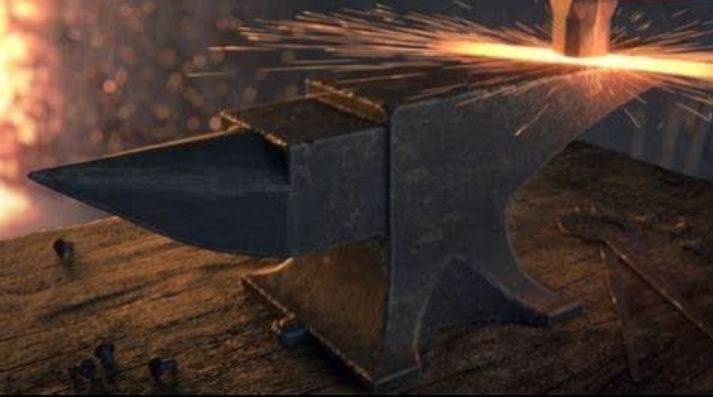
Are the fires of hell melting your resolve? Nothing of strength can be forged except by fire and tempering. It can be beaten, crushed and ground to powder but cannot be forged into steel without it.

I encourage you to be firm in your trust, and even if you have stepped into the shadow of discouragement, you can certainly come back into the light of a bright and trusting relationship with Christ. He wants that. If you believe you can never return, I encourage you to consider Peter’s lapse after he abandoned and denied Christ (Matthew 26:56, 69-74), and Christ’s loving reconciliation of his life back into a dynamic power and fellowship with Him (John 21:15-19, Acts 4:8-13).

Your endurance in your fiery trial can allow Him to use the very fires of hell to forge your molten pain into spiritual steel. Patiently trust Him with that. He who created the heavens and earth certainly has the power, wisdom, and understanding to deal with the hellish flame that surrounds your own hammer and anvil.

Maranatha,

Ken


La razón por la que me quedé (Parte 2)


A partir de ese momento, muchos de sus discípulos se volvieron atrás y ya no lo siguieron. —Tú tampoco quieres irte, ¿verdad? —preguntó Jesús a los Doce. Juan 6:66-67 (NVI)

Escribí acerca de por qué permanecí comprometido con Cristo frente a un grave sufrimiento. Podría haberle dado la espalda y haberme ido.

Estoy seguro de que hay lectores que han clamado a Dios en una terrible crisis de vida y han preguntado como lo hizo David: "¿Por qué estás tan lejos de salvarme, tan lejos de mis gritos de angustia?" (Salmos 22:1.). Tal vez en la decepción te alejaste de tu relación con Él. 

A pesar de lo difícil que puede ser una prueba, Pablo dice que en el esquema de los beneficios eternos serán vistos como luz en comparación con lo que Cristo nos dará. Él escribe: "Porque nuestras angustias leves y momentáneas nos alcanzan una gloria eterna que sobrepasa a todas ellas" (2 Corintios 4:17). No celebramos el dolor y el sufrimiento, sino al Dios Todopoderoso que es el Cuarto Hombre en nuestro horno (Daniel 3:25).

No importa cuáles sean tus pérdidas, Cristo puede usarte. Puede ser desde una posición que toca a millones en un mes hasta dar solo unas pocas copas de agua en Su nombre cada pocos días (Marcos 9:41). En mis muchas pérdidas e incluso fracasos, el Señor me ha abierto otras avenidas donde puedo servir, entre ellas mi pequeño blog devocional. Algunas semanas mi ministerio ha sido para miles y otras semanas solo dos o tres.

No se trata de cantidad, sino de calidad, y eso tiene mucho que ver con nuestra fe en Su capacidad para hacer grandes cosas a través de nuestra obediencia en los pequeños. Ser fiel en lo que Dios ha requerido es todo lo que Él quiere. Él te equipará para esas pequeñas cosas y no espera más de lo que pide. Él solo quiere que estés dispuesto.

Por muy desgarradora que parezca una prueba, Dios es consciente de la profundidad de la misma y de por qué. Tal vez sea para llamar la atención sobre un estilo de vida pecaminoso serio del que no estamos dispuestos a apartarnos, o tal vez para el crecimiento y la madurez como se retrata con Little James. En el sufrimiento del patriarca Jōb, este siervo justo del Señor solo podía ser acusado de ser irreprensible, recto y un hombre que evitaba practicar el mal (JŌb 1:8).

El Señor permitió que Jōb fuera probado, no por la educación de Satanás, porque a él no le habría importado nada si Job fuera una persona justa. El odio del Diablo hacia la humanidad siempre tiene su enfoque en el próximo hombre o mujer que pueda destruir (Primera de Pedro 5:8). La lección es para un mundo que ha soportado la peor parte del pecado de Adán y la maldición que ha traído.

Buscamos un milagro de redención total, pero hasta que se vea ese momento, ¡continuar amando y sirviendo a Cristo a través de los fuegos de tiempos difíciles e inciertos son los mayores milagros para el resto de nosotros! En cualquier prueba que Él permita, Él sabe que estás en un punto de tu relación con Él en el que confiarás en Él a través de ella. ¡Eso dice mucho de ti!

Ciertamente, nunca quiero volver a pasar por ese tipo de sufrimiento, pero me dio una mayor seguridad y confianza en la forma en que el Señor obra en la vida de una persona. Incluso si hubiera muerto, tenía la seguridad de un mayor peso de gloria que me esperaba en Cristo, un mayor peso de gloria que espera a todos los creyentes.

¿Están los fuegos del infierno derritiendo tu determinación? Nada de fuerza puede ser forjado excepto por el fuego y el templado. Se puede batir, triturar y moler hasta convertirlo en polvo, pero no se puede forjar en acero sin él.

Te animo a que seas firme en tu confianza, e incluso si has entrado en la sombra del desaliento, ciertamente puedes volver a la luz de una relación brillante y confiada con Cristo. Él quiere eso. Si crees que nunca podrás regresar, te animo a que consideres el lapsus de Pedro después de que abandonó y negó a Cristo (Mateo 26:56, 69-74), y la reconciliación amorosa de Cristo de su vida en un poder dinámico y comunión con Él (Juan 21:15-19, Hechos 4:8-13).

Su perseverancia en su prueba de fuego puede permitirle usar los mismos fuegos del infierno para forjar su dolor fundido en acero espiritual. Confía pacientemente en Él con eso. Aquel que creó los cielos y la tierra ciertamente tiene el poder, la sabiduría y el entendimiento para lidiar con la llama infernal que rodea tu propio martillo y yunque.

Maranatha,

Ken

Monday, April 8, 2024


A Note: This is the longest devotional blog I have written, over 1300 words. Due to its length, I am delivering it in two parts. Part Two will conclude next week. Maranatha! Return Lord Jesus!

Ken

From this time many of his disciples turned back and no longer followed him. “You do not want to leave too, do you?” Jesus asked the Twelve. John 6:66-67 (NIV)

The Reason I Stayed (Part 1)

After I had suffered with a debilitating brain tumor that left me 100% disabled at age 43, I was once asked by a group in a Sunday School class why I had not turned my back on God.

I had never been asked that and it took me a moment to reflect. I said, “To be honest it never occurred to me. In the time of horrible suffering that I and my family endured, I clung to the Patriarch Jōb’s confidence, ‘Though He slay me, yet will I trust in him,’ (Jōb 13:15). I had nowhere else to go and as Peter had replied to Jesus’s question in John chapter six, I too said, ‘Lord, to who else can I go?’  

I knew God was not the cause of my suffering, Adam’s sin and its curse were. I was assured if God allowed me to die, I would be present with Him. That is where my trust lies and that is why I stayed.”

God did bring me through it. The tumor, called an acoustic neuroma, was extremely large, and sat next to my brainstem. My doctors thought it benign but only gave me a 30% chance of surviving a surgery to remove it.

There would be two surgeries to remove it. The first surgery took 21 hours, with a team of five Mayo Clinic surgeons operating. Because the tumor was touching the brainstem they only removed half of it. They thought removing it completely when it was touching the brainstem would kill me. Their hope was in a few months the tumor would move away from the brainstem and could be removed, and that is what it did. The rest of it was removed 9 months later.

It was a benign growth but so large it did great damage to my hearing and facial nerves. During the first surgery I suffered a permanent paralysis and loss of feeling on the left side of my face. I also lost the hearing in my left ear, and many of my motor skills were negatively affected. I was put in a rehabilitation hospital for a month and a half where I had to relearn the basics of walking, talking, eating, and doing the things I used to take for granted. It would be another six months until I would be able to walk unassisted.

I had not expected that, and I dealt with an angry attitude toward the doctors who had not prepared me. I came to realize it really was not their fault. Their focus was getting the thing out of my head without killing me, which they thankfully did. I had to conscientiously work to keep from harboring a bitter spirit at the surgeons and my post-op traumas. I thought my life as I knew it was over and I would be left sitting in a rocking chair for the rest of my life.

The Lord put a very patient cheerleader in my corner in my wife Tommie Ann. She encouraged and ministered to me with such wonderful healing grace and love with an occasional kick in the pants when I was grouchy and stubborn.

While my motor movements improved, my facial and hearing nerves never returned. I was able to drive after 7 months and for the next 22 years but after a close call in downtown traffic I decided it was time to give it up. I have not driven in 8 years. My left eye does not blink and is sewn half shut to help keep it moist. My balance is a problem and having fallen and broken a hip and leg I now depend on a walker, added to that I only have hearing in one ear. I like to say, “Other than that, I’m fine.”

But seriously, I want to say despite those losses, God faithfully forged my molten pain into spiritual steel and opened areas of healing, growth, and ministry. He strengthened and healed my spirit and character in ways I had not expected. In the thirty years since my surgery, I have been too busy to have time for a rocking chair. I am more productive now than I have ever been.

When things do not go as we hoped, God’s power is made perfect when we are weak (1st Corinthians 12:9). I was touched by a scene in the Dallas Jenkins’ series of The Chosen where Little James has a conversation with Jesus about his disability. Jesus is about to send the disciples out, giving them power to heal the sick and the lame. James, who is handicapped himself questions the Lord as to why He will not heal him. Jesus tells him it is because He trusts him. He trusts him to remain faithful to Him and bring healing to bodies and hearts.

Many will have bodies healed but seeing someone with a disability who still trusts God and chooses to follow Him can be a greater testimony than a physical healing. Jesus ends by saying, “When you leave this earth and you meet your Father in heaven, as Isaiah promises, you will leap like a deer!” I would encourage you to take a few minutes to watch the clip and consider its message. It is on YouTube at ‘little james asks Jesus to heal him.’

(To Be Concluded Next Week)

Maranatha,

Ken

Una nota: Este es el blog devocional más largo que he escrito, más de 1300 palabras. Debido a su longitud, lo entrego en dos partes. La segunda parte concluirá la próxima semana. ¡Maranatha! ¡Regresa Señor Jesús!

Ken

A partir de ese momento, muchos de sus discípulos se volvieron atrás y ya no lo siguieron. —Tú tampoco quieres irte, ¿verdad? —preguntó Jesús a los Doce. Juan 6:66-67 (NVI)

La razón por la que me quedé (Parte 1)

Después de haber sufrido un tumor cerebral debilitante que me dejó 100% discapacitado a la edad de 43 años, una vez un grupo en una clase de escuela dominical me preguntó por qué no le había dado la espalda a Dios.

Nunca me habían preguntado eso y me tomó un momento reflexionar. Le dije: "Para ser honesto, nunca se me ocurrió. En el tiempo de horrible sufrimiento que mi familia y yo soportamos, me aferré a la confianza del Patriarca Jesús: "Aunque me mate, en él confiaré" (Juan 13:15). No tenía a dónde ir, y como Pedro había respondido a la pregunta de Jesús en el capítulo seis de Juan, yo también dije: 'Señor, ¿a quién más puedo ir?' 

"Sabía que Dios no era la causa de mi sufrimiento, sino el pecado de Adán y su maldición. Me aseguraron que si Dios me dejaba morir, estaría presente con Él. Ahí es donde está mi confianza y por eso me quedé".

Dios me ayudó a superarlo. El tumor, llamado neuroma acústico, era extremadamente grande y se encontraba junto a mi tronco encefálico. Mis médicos pensaron que era benigno, pero solo me dieron un 30% de posibilidades de sobrevivir a una cirugía para extirparlo.

Habría dos cirugías para extirparlo. La primera cirugía duró 21 horas, con la intervención de un equipo de cinco cirujanos de Mayo Clinic. Debido a que el tumor tocaba el tronco encefálico, solo extirparon la mitad. Pensaron que quitármelo por completo cuando tocaba el tronco encefálico me mataría. Su esperanza era que en unos pocos meses el tumor se alejara del tronco encefálico y pudiera ser extirpado, y eso es lo que hizo. El resto fue retirado 9 meses después.

Era un tumor benigno, pero tan grande que me hizo un gran daño a la audición y a los nervios faciales. Durante la primera cirugía sufrí una parálisis permanente y pérdida de sensibilidad en el lado izquierdo de la cara. También perdí la audición en mi oído izquierdo, y muchas de mis habilidades motoras se vieron afectadas negativamente. Me internaron en un hospital de rehabilitación durante un mes y medio, donde tuve que volver a aprender los conceptos básicos de caminar, hablar, comer y hacer las cosas que solía dar por sentado. No podría caminar sin ayuda hasta dentro de seis meses.

No me lo esperaba, y lidié con una actitud airada hacia los médicos que no me habían preparado. Llegué a darme cuenta de que realmente no era su culpa. Su objetivo era sacarme la cosa de la cabeza sin matarme, lo que afortunadamente hicieron. Tuve que trabajar concienzudamente para evitar albergar un espíritu amargo con los cirujanos y mis traumas postoperatorios. Pensé que mi vida tal como la conocía había terminado y que me quedaría sentada en una mecedora por el resto de mi vida.

El Señor puso a una animadora muy paciente en mi esquina en mi esposa Tommie Ann. Ella me animó y me ministró con una maravillosa gracia sanadora y amor con una patada ocasional en los pantalones cuando estaba de mal humor y terca.

Si bien mis movimientos motores mejoraron, mis nervios faciales y auditivos nunca regresaron. Pude conducir después de 7 meses y durante los siguientes 22 años, pero después de una llamada cercana en el tráfico del centro de la ciudad, decidí que era hora de dejarlo. No he conducido en 8 años. Mi ojo izquierdo no parpadea y está cosido medio cerrado para ayudar a mantenerlo húmedo. Mi equilibrio es un problema y al haberme caído y roto una cadera y una pierna ahora dependo de un andador, sumado a que solo tengo audición en un oído. Me gusta decir: "Aparte de eso, estoy bien".

Pero en serio, quiero decir que a pesar de esas pérdidas, Dios fiel forjó mi dolor fundido en acero espiritual y abrió áreas de sanidad, crecimiento y ministerio. Él fortaleció y sanó mi espíritu y mi carácter de maneras que no esperaba. En los treinta años transcurridos desde mi cirugía, he estado demasiado ocupado para tener tiempo para una mecedora. Ahora soy más productivo que nunca.

Cuando las cosas no salen como esperábamos, el poder de Dios se perfecciona cuando somos débiles (1 Corintios 12:9). Me conmovió una escena de la serie The Chosen de Dallas Jenkins en la que el pequeño James tiene una conversación con Jesús sobre su discapacidad. Jesús está a punto de enviar a los discípulos, dándoles poder para sanar a los enfermos y a los cojos. Santiago, que también es discapacitado, le pregunta al Señor por qué no lo sana. Jesús le dice que es porque confía en él. Él confía en que Él permanecerá fiel a Él y traerá sanidad a los cuerpos y corazones.

Muchos tendrán cuerpos sanados, pero ver a alguien con una discapacidad que todavía confía en Dios y elige seguirlo puede ser un testimonio más grande que una sanidad física. Jesús termina diciendo: "Cuando salgas de esta tierra y te encuentres con tu Padre en los cielos, como promete Isaías, ¡saltarás como un ciervo!" Te animo a que te tomes unos minutos para ver el clip y considerar su mensaje. Está en YouTube en 'little james le pide a Jesús que lo sane'.

(concluirá la semana próxima)

Maranatha,

Ken